
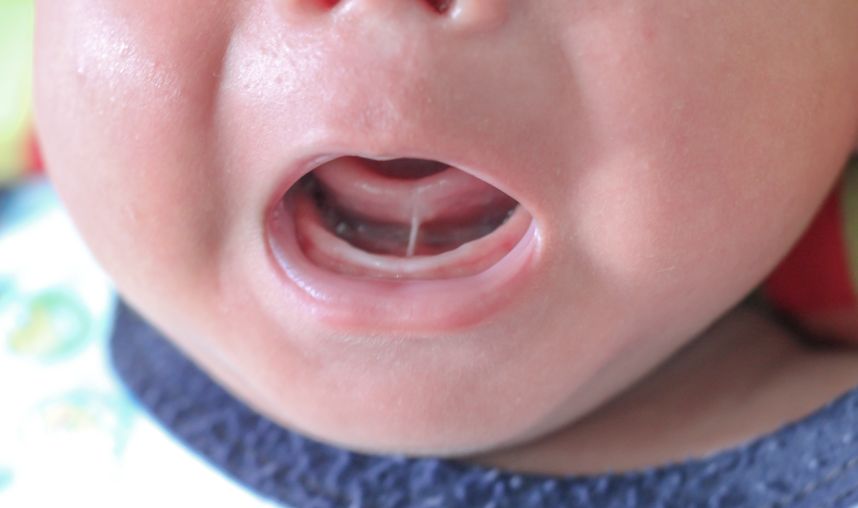
Even despite increased awareness in the media today, if your child was born with a lip or tongue tie, you still may not know much about these conditions. While it’s true that much more has been learned about them in recent years, the fact is that there are still many misconceptions about both, as well as in regards to their respective treatments. Here are five common myths that you may have heard, and the truth about why treating lip and tongue tie can be a life-changing choice for your child.
What are Tongue & Lip Ties?
Present at birth, a tongue tie is when the lingual frenulum (the band of tissue that connects the tongue to the floor of the mouth) is too thick, limiting its range of motion. This can make things like eating and speaking clearly very difficult.
Conversely, a lip tie occurs when the frenulum connecting the upper lip to the upper arch is too thick and can cause similar issues with feeding and speech.
How Can My Dentist Treat at Lip or Tongue Tie?
In most cases, a treatment called a frenectomy can be done to eliminate a lip or tongue tie. Using a soft-tissue laser, your dentist will quickly and comfortably sever the frenulum, allowing the mouth to have a wider range of motion so your baby can nurse or bottle feed with ease, and avoid problems like speech difficulties later on.
Myth #1: Lip and Tongue Ties Only Affect Breastfeeding Babies
Unfortunately, while tongue and lip ties do make breastfeeding difficult, they can also make bottle feeding problematic, too. This can lead to malnutrition, not to mention frustration on the part of both the parent and child.
Myth #2: You Don’t Need to Treat a Lip or Tongue Tie Unless It’s Painful
Not all lip and tongue ties will be painful. Fortunately, while this is good news for your child, it may not be beneficial to them in the long run, because even if it feels fine, they may still suffer from a lack of mobility that can make eating and speaking difficult later in life.
Myth #3: Tongue and Lip Ties Go Away on Their Own
The truth is, tongue and lip ties will not go away on their own, nor will the frenulum stretch out with use. Thus, the only way to improve their range of motion is to address the problem with a frenectomy, which is not only safe but it’s permanent, too!
Myth #4: Tongue and Lip Ties Won’t Cause Problems Later in Life
While lip and tongue tie are present at birth and can immediately cause problems feeding your newborn, those problems don’t usually end with childhood. In fact, they can cause many problems later in life such as speech articulation difficulties and dietary problems including poor nutrition.
Myth #5: You Can Tell if a Tongue Tie is Needed Just by Looking
Although it may seem like you’d be able to tell if your child’s lingual frenulum is excessively thick or short, often parents who have inspected this area are surprised to learn that their baby does in fact need a frenectomy. The great news is that your dentist is trained to identify these conditions and is the best resource for determining whether treatment could help.
To learn more about frenectomies or to see if your child may be suffering from a lip or tongue tie, schedule a consultation with your dentist today.
About Our Practice
At Healthy Sleep Tulsa, our trio of talented dentists are proud to offer a variety of solutions to problems ranging from sleep apnea to lip and tongue tie. If your child is struggling to nurse, bottle-feed, eat, or speak, a frenectomy could be the solution. To learn more about this treatment, schedule a consultation with us today by visiting our website or calling 918-300-4325.